4 Days
Riding
3600 mtr
Uttarakhand
For centuries, Niti Valley served as a primary trade artery connecting the
Indian subcontinent with Tibet via the Niti Pass (5,800m).
The Trans-Himalayan Trade: Indigenous merchants, primarily
from the local Tribe (Rongpa / Tolchha) community, led yak and mule caravans across the high passes. They traded Indian grains, spices, sugar, and fabrics in exchange for Tibetan salt, borax, wool, and pashmina.
Pilgrimage Trail: Historically, the route through Niti Valley was
also used by pilgrims journeying toward Mount Kailash and Lake Mansarovar.
Niti Valley is steeped in Hindu mythology and local folk traditions:
Ramayana Connection: The valley borders Dronagiri (Dunagiri) Village. According to legend, this is the mountain from which Lord Hanuman carried the Sanjeevani herb to heal Lakshmana.
Timmersain Mahadev: Situated near Gamshali and Niti villages,
this natural cave features a naturally formed ice Shivling, drawing comparisons to the Amarnath cave in Jammu & Kashmir.
Local Deities & Pandav Leela: Cultural life in the valley revolves
around clan deities like Fela Devta and Panch Nag. Traditions like
the Pandav Leela dance dramas reenact stories of the Mahabharata.
The geopolitical landscape of the valley shifted dramatically following the 1962 Sino-Indian War:
Border Closure: Under Article IV of the 1954 Sino-Indian Agreement, Niti Pass had been designated as an official trade and pilgrimage route. Following the 1962 conflict, the border was sealed, abruptly ending centuries-old cross-border trade.
Economic Transformation: The trade shutdown forced the local community to shift their primary livelihoods toward agriculture (growing pulses, kidney beans, and barley), wool weaving, and cattle herding.
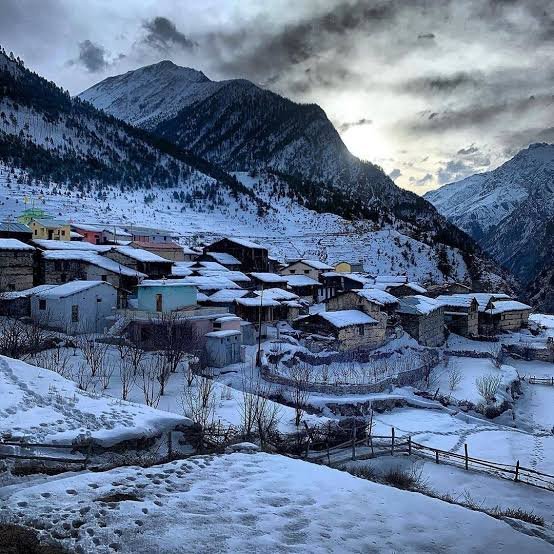
Due to heavy winter snowfall, Niti Valley experiences a seasonal migration lifestyle.
Summer Settlements: Inhabited villages—including Niti (the last village before the border), Gamshali, Bampa, and Malari—are populated from May to October.
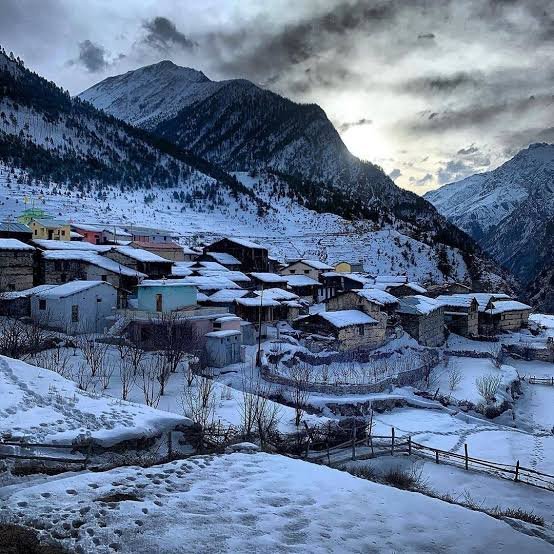
Winter Migration: Before the snow blocks the roads in late October or November, residents migrate to lower-altitude towns like Joshimath, Gopeshwar, or Dehradun.
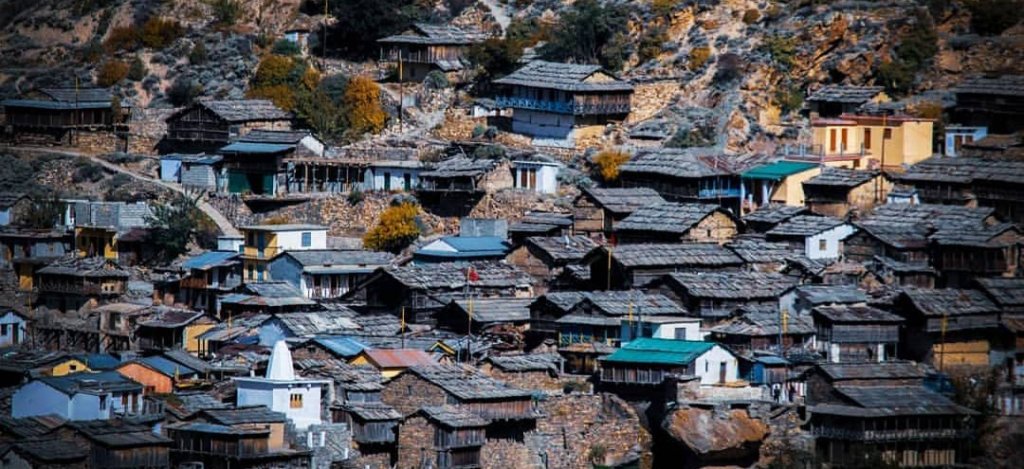
Architectural Heritage: Traditional homes in the valley are constructed using stone walls and carved Deodar wood beams with intricate balconies (jangalas) designed to withstand high winds and heavy snowfall.
210 km
8 to 10 hours
Hotel
Route: Risikesh, Devprayag, Srinagar, Rudrprayag, Nandprayag, Chamoli, Joshimath
70 km
3 to 4 hours
Homestay
4 Days 3 Nights
Inclusion:
3 nights; accommodation on a sharing basis (Joshimath 1 night + Malari 2 nights).
Breakfasts and dinners during the trip.
All Trek Related Equipment (Sleeping bag, Sleeping liners, mattresses, and Utensils), All season trekker tent (twin sharing), Kitchen & Dining tent, Toilet tent, Camping stool, Ropes, Helmet, Ice axe, Harness, Gaiters & microspikes (if required).
Basic first-aid support during the eīxpedition.
Trip coordination, route planning and group management.
Exclusion:
The Dayara Bugyal Trek is located in the Uttarkashi district of Uttarakhand, India. The trek usually starts from a village called raithal.
At Base Camp Raithal, we will be staying in guest houses on a triple/quad sharing basis, with separate arrangements for males and females. During camping, we provide twin-sharing, all-season tents along with sleeping bags, mattresses, and tents, which are part of the central equipment provided by us.
The Best Time to Trek to Dayara Bugyal is during the following periods:
Summer: May to June
Autumn: September to November.
During these months, the weather is pleasant, and the meadows are in full bloom. The clear skies offer stunning views of the surrounding peaks.
The Dayara Bugyal Trek typically takes 3-4 days to complete, including travel time to and from Raithal.
The highest point of the trek is Dayara Bugyal itself, which is at an altitude approximately 3,408 meters (11,181 feet).
Yes, we will provide sleeping, tent, mattress. It is among the central equipment.
The basecamp at Raithal will have concrete toilets. On Trek days, toilet tents will be set up along each campsite.
A toilet tent will have a deep pit, where one can answer nature’s call. There will be a mound of soil and a shovel to cover it up. These are dry toilets, where you’ll have to use toilet paper. There will be a room freshener as well. It’s the most hygienic and convenient way to answer nature’s call in the wild.
Please use plain toilet paper and refrain from using wet wipes since these are not biodegradable.
We understand that plans can change. Our cancellation policy is designed to be fair for both participants and organizers.
Top Destination
Information
Follow Us
Payment channels